
Understanding Product Life Cycle Management: Plan With Strategy, Decide With Purpose, Improve With Intention, and Succeed With Conviction
Imagine that the product you manage is underperforming. As the product owner, you gather executives, marketing and sales leaders, and the project team to decide what should happen next. The discussion starts with energy but quickly stalls. Some want to maintain current production levels. Others argue for scaling back. Some push for lower prices and heavier marketing to revive sales, while a few believe the product should be discontinued altogether. If this sounds familiar, you are not alone.
In many cases, the impasse is not caused by a lack of effort or ideas. It happens because the team is not aligned on—or does not fully understand—which stage the product occupies in its life cycle. Without that shared context, product and brand decisions become inconsistent and hard to defend. Clear next steps begin with a practical understanding of where the product is in its life cycle.
In this article, you will learn what the Product Life Cycle (PLC) is, how each stage shapes product decisions, and which strategies help teams manage the PLC effectively—supported by practical examples.
What is the Product Life Cycle?
A product is a means of delivering value by solving a specific customer or user need through a tangible, digital, or service-based solution. The Product Life Cycle (PLC) is a core concept in product management that describes the stages a product moves through, from launch to market exit. It provides a strategic view of product evolution and helps businesses track performance, sales, and market dynamics over time. With that understanding, product teams can adapt their marketing, pricing, product strategy, roadmap, and development decisions to meet audience needs at each stage.
The PLC is typically divided into four phases: Introduction, Growth, Maturity, and Decline. Expanded models include Development, Saturation, and Revival stages.
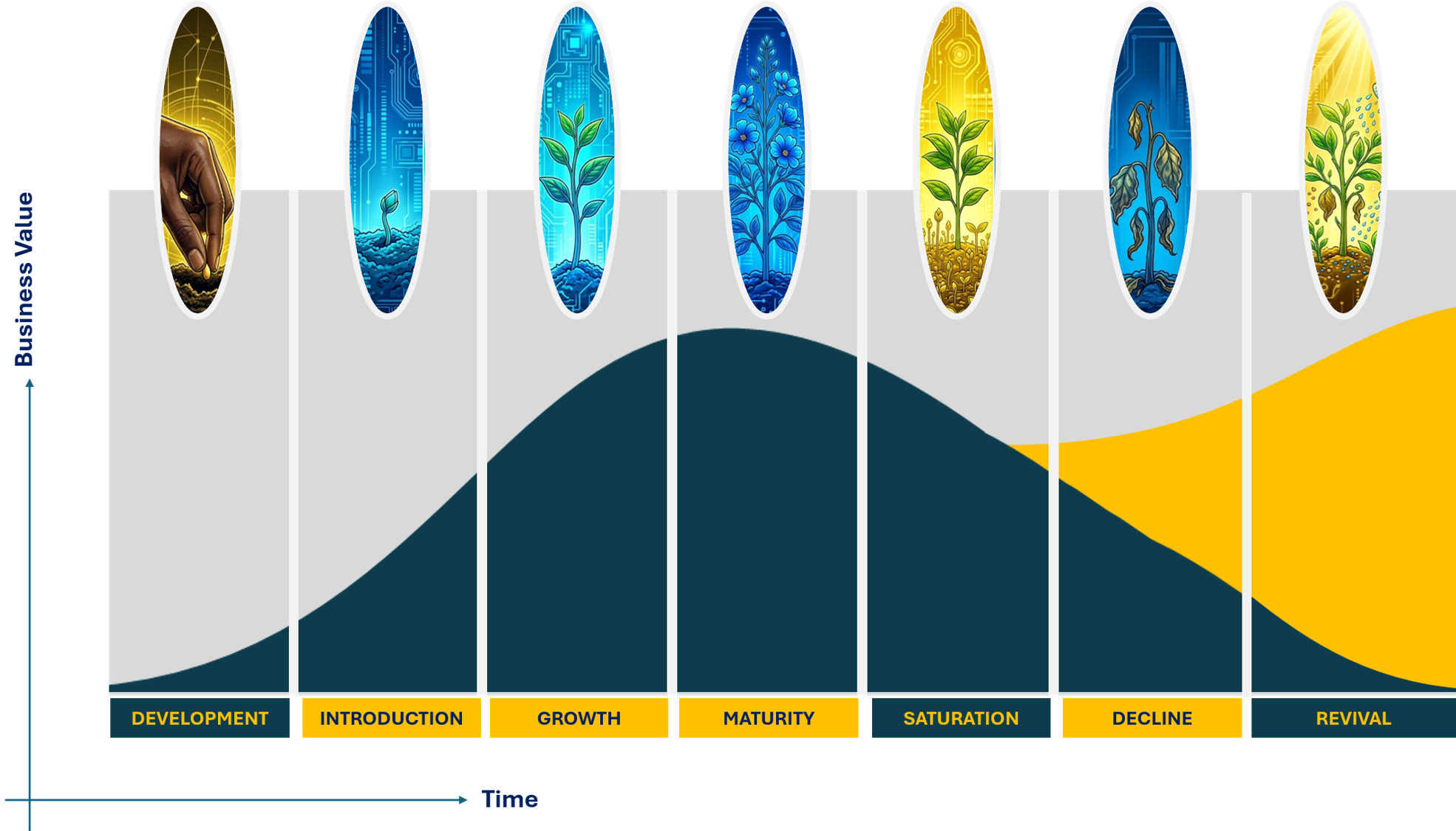
Products, both old and new, can be found at many different points in the product life cycle. Some, such as basting pins and bobby pins, have changed little for decades. Others, like computers and iPhones, have evolved dramatically in both form and function. Some products, such as VCRs and Walkmans, have disappeared, while others, including beepers and landlines, have largely been replaced by cell phones. At the same time, humanoid robots are still in development, and the wide range of soda flavors on grocery shelves have perpetually held a saturated market. Together, these examples illustrate products in different PLC stages, including maturity, growth, decline, revival, development, and saturation.
Originally introduced by Raymond Vernon, the PLC remains a foundational management framework—widely applied in international trade, manufacturing, product development, and marketing. Later, in a 1965 Harvard Business Review article, Theodore Levitt explained how marketers could apply the product life cycle framework to guide marketing strategy as products progress through each stage. He argued that identifying the current stage of the product life cycle helps ensure marketing activities and product adjustments remain appropriate and effective.
In today’s competitive, fast-paced market, launching a great product is only the beginning. Product teams must actively track the PLC to anticipate what comes next and deliberately manage product evolution, maximizing both longevity and profitability.
Why is Understanding the Product Life Cycle Important?
Understanding a product stage in its life cycle and the characteristics associated with that stage helps the product team determine the most effective next step for maximizing value and profitability. In some cases, maximizing value and profitability may mean removing a product from the market sooner than expected in order to avoid continued investment in a declining product. The Sony MiniDisc illustrates how failing to recognize technology and market shifts can turn continued investment into a costly mistake. Introduced in 1992, the Sony MiniDisc, a portable music device, let users record and edit playlists, filling a dire need in the music market. But its high price limited sales among its target audience. In contrast, by the late 1990s, CD-R technology and blank CDs also enabled recording and editing playlists and had become far more affordable, making the MiniDisc a less attractive alternative to buyers. Surprisingly, even as demand weakened, Sony continued pouring millions into the product, including a major thirty-million-dollar marketing push in 1998. In parallel, Apple was developing the iPod, which allowed users to create custom music lists, had greater storage, and an improved user interface. Once the iPod launched in 2001, MiniDisc sales dropped rapidly, leading to the product's eventual demise. Had Sony recognized and responded sooner to the evolving technology and consumer trends, it could have exited the market earlier and avoided wasting substantial resources and investments on a declining product.
Companies that understand and actively apply the PLC framework in product planning gain a clear competitive advantage. Mastering the PLC gives product teams and business leaders a practical framework for making smarter, more timely decisions throughout the life of the product.
Without a clear understanding of the PLC and the current and next PLC stages, teams are more likely to react too late to market changes, leading to wasted investment, missed opportunities, and potential damage to brand reputation. By recognizing and managing the PLC proactively, teams can anticipate change, align strategy to market realities, and guide the product forward with purpose instead of letting the market dictate its direction.
When used effectively, PLC-based strategies can determine whether a product succeeds, sustains profitability, or fails to gain traction at all. That ability to improve outcomes and reduce avoidable risks is one of the strongest advantages of using the PLC as a strategic guide. Beyond this core benefit, the PLC offers several additional advantages that can strengthen product strategy, improve resource allocation, and support long-term business growth:
Align marketing, sales, and leadership around a shared view of performance
Make informed decisions on investment, optimization, or product retirement
Avoid or eliminate ideas that no longer align with the strategy
Prioritize efforts where they deliver the greatest business impact
Monitor and respond to where the product is growing, stabilizing, or declining
Identify risks early—when they are easier and less costly to address
Understand Market Dynamics, including consumer behavior, market forces, and trends relevant to each stage
What are the Product Life Cycle Stages?
The PLC represents the period where a product is available in the market, from introduction to eventual exit. It outlines the typical progression through development, growth, maturity, and decline. As markets evolve, even highly successful products can become obsolete due to shifting consumer preferences, emerging technologies, and increasing competition. Trends that drive rapid success can also accelerate decline. By understanding the PLC, product teams can better anticipate changes, make informed decisions, allocate resources effectively, and adapt strategies to maximize performance at each stage.
Each stage presents distinct characteristics that drive targeted strategies, allowing teams to optimize outcomes, sustain relevance, and drive long-term value. By raising awareness of each PLC stage and taking calculated, strategic actions to address stage-specific challenges, product teams can maximize performance and profitability. Proactive planning for life cycle extension or a timely market exit enables more effective resource allocation and informed decision-making.
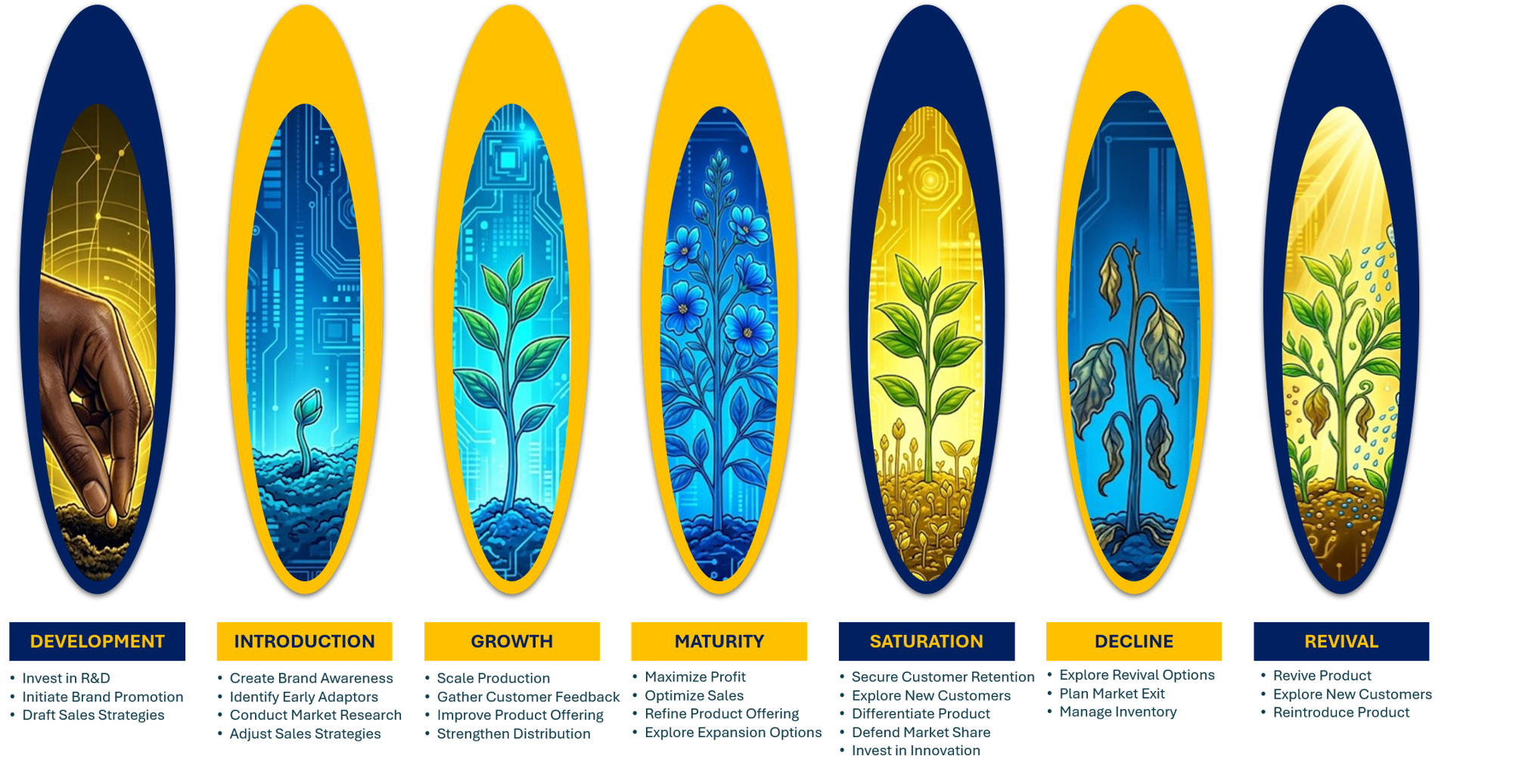
Development Stage:
Also known as the research and development (R&D) stage, this phase focuses on turning ideas and vision into a product. Product teams gather and analyze input from internal and external stakeholders before launch. They use experimentation, data collection, and assumption testing to build a product that is valuable, viable, usable, and feasible. This stage also includes designing prototypes and testing them rigorously to ensure they meet market needs.
Key Strategies:
Invest heavily in research and product development to identify specific problems, design solutions, and confirm that the product delivers the intended outcome and impact.
Explore marketing approaches, such as advertising, social media engagement, and publications, to create awareness, build excitement, and momentum ahead of launch.
Explore sales strategies, such as competitive pricing analysis, special offers, and partnerships, to spark interest and create demand ahead of launch.
Key Characteristics:
Sales: Low
Investments: Very High
Profits: Low
Competition: Low to None
Customer Awareness: Low to None
Product Team: Research and Design Heavy
Outcome and Impact: Uncertain
Stakeholder Engagement: High
Introduction Stage
The introduction stage, also known as the launch stage, is the point at which a developed, market-ready product is officially introduced to customers, and demand generation begins. During this phase, product teams focus on building awareness through targeted marketing, engaging early adopters with compelling offers, and gathering feedback from the market. They also work to identify both enthusiastic adopters and skeptics, study customer needs and barriers to adoption, and adjust strategies based on those insights to strengthen market traction.
Key Strategies:
Use operational strategies, such as frequent incremental releases (including an Minimum Viable Product (MVP) release), to build engagement and momentum.
Conduct customer feedback and survey initiatives, such as focus groups and testing sessions, to gather insights and inform future strategies.
Develop marketing strategies that attract and engage customers across high-impact channels, especially social media, and consider partnerships with influencers or complementary brands that already have established audiences.
Define a compelling value proposition and clear differentiators that resonate with target customers, while creating personalized and engaging experiences that encourage adoption.
Introduce sales strategies that encourage trial and conversion, such as special offers, membership benefits, and premium service options.
If the introduction stage extends too long or fails to deliver the intended results, evaluate alternatives, such as pivoting, redesigning, or repurposing the product. If those options are not viable, discontinuing the product may be the most prudent way to avoid further sunk costs.
Key Characteristics:
Sales: Low
Investments: High
Profits: Low
Competition: Low to None
Customer Awareness: Low
Product Team: Focus on Launch
Outcome and Impact: Uncertain
Stakeholder Engagement: High
Growth Stage
Following a successful introduction stage, the next phase in the PLC is the growth stage. During this phase, consumer awareness and interest increase, along with brand recognition, demand, and profitability. Product teams must scale production to meet rising demand, strengthen distribution networks to reach a broader customer base, and enhance the customer experience to build loyalty. They should also monitor market trends and customer feedback closely to guide ongoing product improvements. As the product becomes more established, it will likely attract competitors that offer similar solutions, making it essential to track and respond to emerging competition.
Key Strategies:
Use operational strategies, such as frequent incremental releases (including an MVP), to build engagement and sustain momentum.
Develop marketing strategies that attract and engage customers across high-impact channels, especially social media, and explore partnerships with influencers or complementary brands to broaden reach.
Introduce sales strategies that strengthen brand preference and loyalty, such as special offers, membership benefits, and premium service options.
Consider bold sales and operational approaches to expand the target audience, including repurposing, pivoting, merging, or bundling offerings.
Expand distribution channels to increase product availability and improve market penetration.
Monitor existing and emerging competitors and respond with timely marketing and product strategies that keep the offering top of mind for consumers.
Key Characteristics:
Sales: Increasing
Investments: Moderate—Focused on Brand Presence
Profits: Moderate— Increasing with Demand
Competition: Growing— New Competitors Emerge
Customer Awareness: Growing
Product Team: Focus on Production and Product Improvement
Outcome and Impact: Able to Measure Real Time
Stakeholder Engagement: Decrease— Focus on Improvement Feedback
Maturity Stage
During the product maturity stage, sales peak and begin to level off after the rapid growth phase; however, because operational and marketing costs often decline, profitability can remain strong. At this point, the market is well-established, but competition intensifies as comparable products enter with differentiated value propositions. The strategic focus shifts to maximizing profit, refining the product, defending market share, retaining customers, and strengthening brand loyalty. Success in the maturity stage depends on streamlining production costs, optimizing packaging or pricing strategies, and reinforcing distinctive brand advantages that competitors cannot easily replicate.
At this stage, if the brand remains strong and customer demand is still healthy, consider extending the product portfolio to prolong relevance and unlock new revenue. Teams can do this by reinventing or extending the offering through operational strategies, such as spin-offs, line extensions, and repurposing, supported by marketing and sales strategies, such as bundling, partnerships, and brand pairings.
Key Strategies:
Release frequently and incrementally to sustain engagement and improve customer retention.
Focus on marketing strategies that attract and engage customers across high-impact channels, especially social media, to broaden the target audience.
Define compelling value propositions and clear differentiators that resonate with target customers, while creating personalized experiences that encourage adoption.
Promote sales strategies that strengthen retention through subscriptions, membership benefits, and premium service options.
Consider reinventing the product through operational strategies, such as pivoting, repurposing, replacing, transitioning, and merging.
Consider extending the PLC through strategies, such as replacement, spin-offs, or line extensions.
Explore new demographics through partnerships, brand pairings, and bundling or unbundling options.
Key Characteristics:
Sales: High—Stagnating
Investments: Low
Profits: High
Competition: High
Customer Awareness: Maxed
Product Team: Focus on Product Improvement and Technical Debt
Outcome and Impact: Monitor and Respond Real Time
Stakeholder Engagement: Low
Saturation Stage
At this point, the product has reached maturity, and sales growth begins to plateau. Market acceptance is broad, customer awareness is high, and the environment is becoming increasingly crowded with alternatives. Competition is intense, as organizations fight aggressively for suppliers, customer loyalty, and market share. As adoption nears saturation among competitors, companies face mounting pressure and fewer opportunities to drive growth through new customer engagement.
In the saturation stage, success depends on strong differentiation, efficient operations, and the ability to create renewed value in a crowded field. With organic growth constrained, product teams must pursue bold marketing and operational strategies that refresh the original concept, introduce alternate options, and open pathways to new segments and untapped demand.
At this stage, product teams generally have three strategic options: Extend the product life cycle, reinvent the product to create new demand, or maintain performance until decline becomes unavoidable. The right path depends on market conditions, competitive pressure, and the potential long-term outcome and impact of the product. In each case, marketing, sales, and operational strategies should be aligned to maximize value and support the most effective course of action.
Key Strategies:
Define compelling value propositions and clear differentiators that resonate with target customers, while creating personalized experiences that encourage brand preference and conversion.
Promote sales strategies that strengthen retention through subscriptions, membership benefits, and premium service options.
Consider reinventing the product through operational strategies, such as pivoting, repurposing, replacing, transitioning, and merging.
Consider extending the PLC through strategies, such as replacement, spin-offs, or line extensions.
Explore new demographics through partnerships, brand pairings, and bundling or unbundling options.
Prepare for the decline stage with strategies, such as merging, integration, or selling the product.
Key Characteristics:
Sales: Stagnated
Investments: Low
Profits: Moderate
Competition: Very High
Customer Awareness: Maxed
Product Team: Focus on Operational Strategies to Revive
Outcome and Impact: Revise to Realign with Strategy
Stakeholder Engagement: High
Decline Stage
The decline stage typically follows the maturity stage as sales begin to fall due to market saturation, shifting customer preferences, and the emergence of superior alternatives. However, products can enter the decline stage at any point in the product life cycle if they fail to sustain relevance. Key drivers include intensifying competition, technological advancements, and evolving consumer behavior. This stage is a critical point for portfolio evaluation, where some products require a structured sunset plan, while others may present opportunities for reinvention or expansion into adjacent markets. Product teams generally have three strategic paths: Revive the product, refocus on a niche or loyal customer base, or retire the product entirely. Success in this phase depends on understanding the root causes of decline, clear decision-making and disciplined execution, aligning with customer needs, managing inventory to minimize losses, and prioritizing innovation to support future growth.
Key Strategies:
Exit efficiently by depleting inventory through discounts, donations, or strategic brand pairings.
Preserve value by transferring subscriptions or memberships to existing offerings and integrating with established products or brands.
Focus on niche retention by serving a smaller base of loyal or nostalgic customers.
Reallocate resources by repurposing infrastructure and reinvesting resources in new innovations and growth opportunities.
Explore revival options.
Key Characteristics:
Sales: Declining
Investment: Low
Profitability: Declining
Competition: Very high
Customer awareness: High
Product Team Focus: Retirement and Decommissioning
Outcome and Impact: Limited—Emphasis on Niche Retention
Stakeholder Engagement: Low
Revive Stage
The revival, or revitalization, stage is a strategic effort to prevent a product from slipping into decline by restoring its relevance in the market. Rather than discontinuing the product, product teams evaluate opportunities to refresh and reposition the product through meaningful improvements, new target segments, and renewed marketing efforts to reintroduce the product and breathe new life into what was once fading. This stage begins with research into stakeholder and customer needs so the right revival strategy can be selected. Common approaches include rebranding, product enhancements, and focused campaigns that help the product regain momentum and align with current market demands.
Key Strategies:
Reinvent the product through transformations, such as redesign, pivoting, replacement, or transition.
Extend the product life cycle by leveraging repurposing, spin-offs, or line extension strategies.
Sustain relevance by merging or integrating the product with a well-established, high-performing offering.
Unlock new customer segments through strategic partnerships, brand collaborations, and bundling or unbundling approaches.
Expand into new markets by entering new geographies and targeting additional demographics.
Key Characteristics:
Sales: Stagnant
Investments: High—Focused on Marketing and Product Revival
Profits: Low
Competition: Very High
Customer Awareness: High
Product Team Focus: Operational Strategies That Revive the Product
Outcome and Impact: Realignment With New Revival Strategies
Stakeholder Engagement: High
What Factors Affect the Product Life Cycle?
PLC stages do not follow a fixed timeline; instead, they are dynamic and fluid, influenced by a range of internal and external forces. The pace, duration, and progression of each stage are shaped by factors such as technological advancement, market acceptance, and competitive intensity. Understanding these factors is essential for product teams, as they directly impact the trajectory and performance of the product. By recognizing and responding to these influencing factors, product teams can make more informed decisions around product development, marketing, and overall strategy. Here are some of the key factors that influence the product life cycle:
Marketing and Branding Strategies: Marketing is a dynamic and personal exchange between brands and consumers—one that demands precise timing, rhythm, and alignment. Successful campaigns strike the right pace and cadence while fostering a meaningful emotional connection with the targeted audience. When executed well, marketing and branding can breathe new life into a product, extending its growth or maturity within the PLC. Conversely, weak or misaligned strategies can quickly erode relevance and accelerate decline.
Example: The 2009 rebrand of the Tropicana logo stands as a textbook marketing failure. The company invested over $50 million to replace its iconic, instantly recognizable orange-with-a-straw packaging with a generic, minimalist design. The result was immediate consumer confusion and disconnect—shoppers struggled to identify the product on shelves—leading to a sharp 20% drop in sales.
Fluctuating Demand: Products driven by seasonal or popular trends often experience shorter life cycles, with demand peaking at specific times and tapering off quickly. To remain effective, marketing and branding efforts must anticipate and respond to these fluctuations in demand. By aligning strategies with changing market dynamics, product teams can optimize performance, sustain relevance, and maximize profitability.
Example: Rather than simply promoting new beverages, Starbucks transforms seasonal products—such as the Pumpkin Spice Latte, Eggnog Latte, and holiday red cups—into highly anticipated cultural moments. By leveraging limited-time availability, the brand creates urgency while fueling user-generated content across platforms like Instagram and TikTok. This deliberate use of scarcity, combined with sensory-driven nostalgia, positions Starbucks as a marker of seasonal change. As a result, customers actively seek out these offerings to signal the “start” of the season, driving consistent, year-over-year spikes in demand and revenue.
Technological Advancements: Continuous updates and the adoption of new technologies are essential to maintaining relevance and competitiveness. The pace of research and development directly influences how quickly a product becomes outdated, with the rate innovation capable of either shortening or extending its life cycle. While breakthrough innovations can compress early stages and push older products into rapid decline, consistent incremental improvements help sustain market position. High-quality products, combined with regular enhancements, build customer loyalty, drive repeat purchases, and reflect positive customer perception. When executed effectively, well-timed releases can also create cultural moments that generate excitement and significantly boost demand.
Example: Breakthrough innovations—such as the enhanced camera and integrated services, like Apple Music in the iPhone, eliminated the need for standalone portable devices, like the iPod and digital cameras. At the same time, Apple amplifies its impact through highly orchestrated product launches, turning releases into cultural events that generate anticipation, excitement, and sustain demand among loyal customers.
Economic Conditions: Economic stability and consumer purchasing power play a critical role in shaping the product life cycle. Factors, such as inflation, recession, and income volatility, directly influence spending behavior and, in turn, product demand. During economic downturns, consumers often delay purchases, extend the use of existing products, and shift toward more affordable alternatives. This behavior can prolong the maturity stage for some products while accelerating decline for premium or discretionary offerings. Organizations that anticipate and adapt to these economic shifts are better positioned to sustain demand and protect market share.
Example: Amid the severe early 1980s recession that was marked by high inflation and declining demand for new cars, the DeLorean Motor Company struggled to sustain the high production costs of its iconic sports car, ultimately leading to bankruptcy.
Competitive Landscape: The intensity of competition and level of market saturation play a decisive role in shaping the duration and progression of each PLC stage. Sustained success requires continuous monitoring of competitive activity and the agility to respond effectively. Markets with low barriers to entry tend to accelerate the PLC, as rapid influxes of competitors drive saturation and price competition. In contrast, high barriers to entry can extend the life cycle by limiting competition and preserving market stability, allowing products to sustain relevance for longer periods.
Example: Launched in the early 1990s, Crystal Pepsi quickly became a casualty of its own trend. The rapid influx of copycat “clear” beverages flooded the market, leading to oversaturation and diminishing consumer interest. What began as a novel innovation quickly lost its distinctiveness, causing demand to fade within a year.
Regulatory Compliance and Social Responsibility: Evolving regulations, industry standards, and environmental sustainability and ethical practice demands play a critical role in shifting consumer expectations and shaping product development, production, and marketing. Failure to meet these standards can result in loss of customer trust and confidence, risk reputational damage, incur financial penalties, or even cause market exit. In contrast, compliant and forward-thinking products are often perceived as responsible and innovative, strengthening brand credibility and consumer confidence. To remain competitive, product teams must proactively monitor changes in requirements and adapt quickly, ensuring both compliance and alignment with emerging market expectations.
Example: Traditional incandescent bulbs were highly inefficient, converting most of their energy into heat rather than light. Growing concerns over energy consumption and carbon emissions led to regulatory phaseouts worldwide, accelerating their decline. As a result, highly efficient LED alternatives emerged as the standard, offering superior performance, lower energy use, and longer life spans.
Customer Perception and Satisfaction: Positive customer perception and high satisfaction foster brand trust and confidence, sustain demand, retain customers, and defend against competition, prolonging the PLC. Negative perception and diminishing satisfaction signal the need for improvements or strategic pivots—and, if unaddressed, lead to decline. High-quality products reinforce positive perception and loyalty, while poor quality erodes trust, accelerates churn, and weakens market position. Products that actively respond to customer feedback and evolving preferences are more likely to sustain relevance, extend maturity, and avoid premature decline.
Example: In 2012, Google introduced Google Glass as a futuristic, eyewear-based smart device. Despite its innovation, persistent privacy concerns, product limitations (including battery life and quality), and widespread negative perception eroded consumer confidence and demand. While initial hype was strong, the product failed to deliver clear value, leading to dissatisfaction and, ultimately, its withdrawal from the market.
Cultural and Social Factors: Shifting social values, cultural norms, and evolving public concerns can significantly influence a PLC—sometimes rendering once popular products obsolete. Changes in consumer beliefs, ethics, and societal expectations can quickly alter demand and reshape market viability. When product teams proactively adapt to these shifts, they can reenergize consumer interest, strengthen brand relevance, and extend the PLC. However, engagement with certain issues can be polarizing. Aligning with or responding to sensitive topics—such as politics, war, or religion—carries inherent risk and may negatively impact brand perception if not carefully managed. As a result, brands should approach these topics with caution and, when appropriate, avoid them to maintain neutrality, preserve trust, and maintain broad market appeal.
Example: The 2016 decision to allow customers to use restrooms aligned with their gender identity by Target stores sparked significant public backlash, including a boycott with over 1.4 million pledged participants. The controversy contributed to declines in store traffic and same-store sales, alongside an approximate 10% drop in second-quarter earnings in 2016. In response, Target invested $20 million to retrofit stores with private, single-stall restrooms, aiming to balance inclusivity with customer concerns.
Risk-Bearing Capacity: Managing risk in the PLC is a strategic discipline. It requires balancing potential rewards against costs, timing decisions carefully, and aligning with organizational capacity. Well-timed risk taking, such as launching MVPs early or pivoting during maturity and decline, can drive growth, extend relevance, and improve profitability. However, excessive risk, through over-advanced innovation, misaligned branding, or pricing beyond market tolerance, undermines success. Effective risk management depends on understanding the risk-bearing capacity of the organization, including resources, funding, and brand equity. Higher capacity enables bolder, value-generating moves, while lower capacity demands more measured, incremental approaches.
Example: In 1985, Coca-Cola took a bold risk by replacing its 99-year-old formula with a sweeter alternative, New Coke. Although it outperformed Pepsi in blind taste tests, the company underestimated consumers' deep emotional attachment to the original brand. The resulting backlash was swift and intense, forcing Coca-Cola to reintroduce “Coca-Cola Classic” just 79 days later. Despite the misstep, its strong financial position and established brand equity limited the long-term impact. Its high-risk bearing capacity enabled a rapid recovery—an advantage that many companies with weaker brands or fewer resources may not have.
Distribution Channels: Robust distribution channels are a critical driver of PLC performance. By enabling rapid market entry, broad accessibility, and consistent availability across physical, digital, and remote platforms, strong distribution networks accelerate adoption and expand product reach. Effective distribution not only increases visibility and customer familiarity but also supports rapid scaling and entry into new geographic and international markets—extending the PLC by unlocking new customer segments. Sustained availability and seamless access reinforce brand loyalty, stabilize demand, and enhance profitability. Conversely, weak or limited distribution can constrain reach, hinder revival efforts, and accelerate product decline.
Example: The Amazon Fire Phone launch in 2014 struggled to gain traction despite strong financial backing and innovative 3D features. Its exclusive launch on the AT&T network severely limited distribution, restricting access for customers on other major carriers. This constrained reach directly suppressed sales volume, hindered market penetration, and accelerated the rapid decline and eventual market exit in 2015.
Patents: Patents play a powerful role in shaping the product life cycle by granting temporary market exclusivity, effectively creating a controlled monopoly. In the early stages, patents enable premium pricing, protect market share, and foster strong brand loyalty by limiting direct competition. As patents expire, markets often experience a surge in competitors, leading to rapid saturation and a decrease in price and sales, accelerating the transition into the decline stage. To mitigate this impact, companies frequently employ patent extension strategies, such as filing continuation or improvement patents, linking secondary protections, or introducing modified versions of the product under new patents.
Example: Lipitor, a blockbuster statin medication developed by Pfizer to treat high cholesterol, became the best-selling drug at its peak, generating over $13 billion in annual revenue. However, following the expiration of its primary U.S. patent in November 2011, generic competitors rapidly entered the market. Within a year, generic variations captured approximately 80% of prescription volume, triggering a steep decline in branded revenue.
Understanding the factors that influence the PLC is essential for product teams aiming to navigate challenges, extend product longevity, and sustain profitability. These dynamics directly impact performance, making it critical to assess both internal capabilities and external market conditions with appropriate focus and rigor. A clear grasp of these drivers enables teams to collect relevant data, conduct informed analysis, and select the most effective strategies. Whether the objective is to prolong growth, optimize maturity, or execute a timely and strategic exit, informed decision-making ensures resources are allocated efficiently, and outcomes are maximized. Ultimately, product teams that proactively align their strategies with these evolving factors are better positioned to maintain competitive advantage, drive sustained performance, and deliver long-term value.
What are the Risks of Ignoring the Product Life Cycle?
Ignoring the PLC introduces significant risk. Effective PLC management requires looking beyond short-term sales and profits to recognize early signals that indicate the future of the PLC trajectory and explore opportunities for extension through deliberate strategy and execution.
When product teams fail to actively manage the PLC and proactively address stage-specific challenges, they expose themselves to a range of risks—including damage to brand reputation, inefficient use of scarce resources, stalled innovation, and premature obsolescence. By overlooking the unique characteristics and warning signs of each stage, product teams often become reactive, addressing issues only after they arise rather than proactively identifying and capitalizing on risks and opportunities. Below are some of the key risks associated with neglecting the product life cycle:
Premature or Rapid Decline: In the early stages of the PLC, when early warning signals are missed, effective market entry is limited, causing momentum to stall before demand fully develops. In later stages, a lack of proactive monitoring and timely response to shifting market demands and technological advancements quickly falls behind evolving trends, stalling innovation and hindering competitive posture, possibly pushing a product into decline faster than planned.
Missed Life Extension Opportunities: Whether a product is in decline or thriving, it can often be extended beyond its original purpose to unlock new revenue streams. Product teams must identify unmet demand and recognize where existing products can be adapted to fill those gaps, enabling continued relevance and growth. Overlooking opportunities to reinvigorate offerings—through spin-offs, line extensions, mergers, or integrations—can further constrain growth and shorten the product life cycle. Proactive innovation is essential not only to remain competitive but to extend longevity and unlock new value.
Weakened Competitive Edge: Rapid shifts in technology and consumer expectations demand continuous innovation. Products that stagnate risk strengthening competitors' positions, as rivals fill gaps with more advanced, relevant alternatives—weakening market share, brand equity, and competitive advantage.
Operational Inefficiencies: Without a structured PLC approach, teams often identify design or production issues too late, leading to cost overruns for rework and delayed time-to-market. Also, product teams may overinvest in improving or promoting declining products, or conversely, withdraw support too early and lose potential revenue. Aligning product improvements and marketing efforts with the correct PLC stage is essential. When executed effectively, this ensures efficient resource allocation, maximizes profitability, and sustains product performance.
Inventory Inefficiency: A lack of understanding of market position and demand can lead to poor production decisions—overproducing declining products or underproducing thriving ones. This results in excess inventory, stock shortages, and lost revenue opportunities. Aligning production with the appropriate PLC stage and real-time demand is critical. Effective inventory management minimizes waste, reduces storage costs, and ensures products are available to meet demand—maximizing profitability and operational efficiency.
Portfolio Misalignment: Applying a one-size-fits-all approach to PLC management across all products in the portfolio can weaken overall performance. Effective management requires aligning strategies to each PLC stage of each product while maintaining a portfolio-wide perspective. By continuously assessing and adapting, teams can streamline the portfolio, reduce internal competition, and ensure each product contributes to profitability and overall performance.
A disciplined understanding of the PLC enables continuous monitoring, informed decision-making, and timely strategic action. With the right approach, teams can enhance current performance, extend product longevity, and maximize value over time.
Conclusion
Understanding and managing the PLC is essential for sustaining product success, maximizing profitability, and maintaining competitive advantage. By understanding and actively managing each stage—from introduction to decline—product teams can anticipate market shifts, respond to evolving customer needs, and make informed strategic decisions. This enables product teams to optimize performance, allocate resources efficiently, and identify opportunities to extend product life or innovate at the right time.
Conversely, ignoring the PLC can have significant negative consequences. Without proactive oversight, products risk premature decline, missed innovation opportunities, operational inefficiencies, and misalignment with market demand. Ultimately, neglecting PLC stages leads to reduced profitability, weakened brand position, and, in many cases, early product obsolescence.
In today’s fast-moving and competitive landscape, disciplined PLC management is not optional—it is a critical capability for driving sustained performance, strategic agility, and long-lasting business success.
